Compromised Energy
Feb 19th, 2008 | By Jonathan Golob | Category: EnvironmentalToday, for the first time ever, oil ended the day above $100 a barrel.
It won’t last.
The last time oil hit these levels (adjusted for inflation) was in 1980, after the throes of the Iranian revolution. The sudden drop in supply shot prices upwards. Before that, during the oil embargo of 1973, oil simply ran out in many places.
This time a supply shock doesn’t take the blame. Sure, concerns about a sudden loss of supply feed into the high price, but more energy is being produced and consumed globally than any other time in human history. Massive demand–unprecedented thirst for oil products like gasoline, diesel and jet fuel from both the developed and developing world–takes the blame this time around.
In unprecedented numbers, people around the world have the financial, social and economic means to consume energy at a time when traditional crude oil production is leveling off. It brings up an interesting question: Why is there gas to be purchased, at any price? Where are the gas lines? Ask Canada.
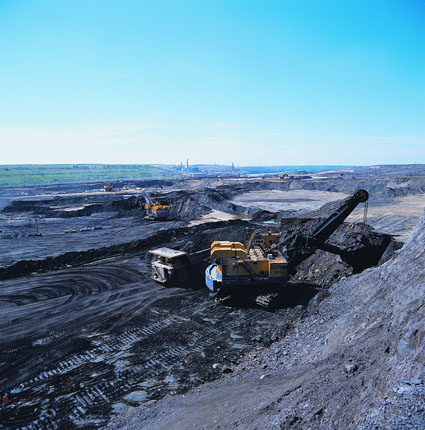
At about $30 a barrel, it becomes profitable to scoop up the tar sands of Alberta–4500 pounds of sand per barrel–heat it up to separate out the tar from the sand and then chemically crack the tar into something resembling crude oil. Needless to say, all of this comes at a hideous environmental cost. Thanks to all of the energy intensive processing before the sands become oil-like, about fifteen to forty percent more carbon is ultimately released per barrel of oil equivalent–all of the reduced carbon emissions from increasing CAFE standards? Instantly canceled out in Canadian rockies–plus vast pools of toxic water, destruction of the boreal forest and the unearthing of heavy metals. Production is expected to expand for the next twenty-to-thirty years, helping fill the gap between global energy consumption and traditional crude production.
Oil sands are the among the easiest of the synthetic fuels to manufacture. Oil shale or coal liquifation? Profitable at current oil prices. Of course, the further the input material is from oil, the worse the environmental hit. Coal liquifaction, for example, doubles the carbon impact per barrel compared to the already hefty impact of crude oil. Technologies like carbon sequestration could help substantially in reducing the greenhouse gas impact of this steady switch, but are too expensive to be implemented without being required for everyone.
What about biofuels? Aren’t we already subsidizing plants? Isn’t that the more environmental way to go? Nope, not when you consider these alternatives with a proper life cycle analysis--considering the impact not just of running the plant, but building and decommissioning it as well. In fact, the only current technologies better than fossil fuels? Wind and geothermal. Solar might get close to the total environmental impact of fossil fuel at a large scale of manufacturing.
Where the hell are all the better alternatives? We’ve been asking private industry, individual companies, to start their own private Manhattan projects. Thanks to how our patent system works, to how intellectual property is handled, all of the prize goes to the first–the second gets nothing. No single company can take on that risk, sink that much R&D money into something that might not work, or be scooped by a competitor before the investment can be recovered–pretty much the same problem the biotech industry has developing basic enabling technologies. The solution that works? Publicly funded research, results shared to any company that would want to commercialize the results.
The longer a barrel of oil stays around or above $100 a barrel, the more likely these “unconventional hydrocarbon” technologies will be unleashed, with the predicable environmental devastation. Why hasn’t it happened yet? Another failure of the market. The amount of oil shale and coal available for conversion is so vast–an order of magnitude larger than crude oil reserves, far larger than the oil sands–that everyone assumes once these plants get built, energy prices will collapse below profitability. The reserves of energy are too big, the potential bonanza too great, for an unregulated market to maintain profitability. The large coal companies are begging for regulation–busy demanding a price floor before they proceed.
In comes our opportunity. The United States contains an overwhelming amount of the global coal and oil shale reserves–making us the most hydrocarbon endowed country on the planet. The coal industry wants a price floor? Give them a carbon tax and strict regulations to where, how many and what kinds of liquifaction plants can be built. Demand that all plants implement carbon sequestration. Use the huge sums of money generated by the tax to fund basic scientific research into genuine alternatives to fossil fuels. A cleverly crafted policy now–and the window is so vanishingly small for this to happen–could bring us a rare win: New technologies to finally get us beyond fossil fuels, reduced energy prices, less money sent to despotic regimes worldwide and an eventual real positive environmental impact.
If we continue on the hands-off style, continue to ignore that hydrocarbons will remain the dominant form of energy for at least a few more decades, the profit motive will become overwhelming. The plants will be built, but without a carbon tax, without the carbon sequestration, without the regulations that would make the impact at least less than the worst case scenario. Cheaper energy is inevitable. How much it costs us isn’t.